Monday, January 01, 2018

The Morning After - Cowboys 6, Eagles 0 (9-7)

The Morning After

On the very first morning of 2018, we gather to remember the Dallas Cowboys' 2017 season as it has been completed.
There will be no playoffs. That was made clear Christmas Eve. The Cowboys did, in fact, secure a winning record in Philadelphia on Sunday, which I suppose makes some people feel better. Evidently, those will not be the fans who seemed tortured by the entirety of the afternoon against the Eagles in which neither team seemed interested in anything but getting back inside on a very chilly day with nothing on the line.
The Cowboys finish the 2017 season with a record of 9-7. While I constantly assume that a 9-7 season will get you into the playoffs, that should be put to rest after doing the research. Twenty-eight times the Cowboys have finished a season with 10 or more wins and they made the playoffs all 28 of those occasions. But that leaves 30 seasons in which the Cowboys did not get to 10 wins, and they reached the postseason on just four of those occasions. In the 1982 strike season, 6-3 put you in the postseason. In 1999, you may recall the Troy Aikman-Chan Gailey Cowboys getting into the playoffs at 8-8. In 1967, they qualified easily with a 9-5 record. And in 2006, 9-7 also put the Cowboys in the postseason, which set them up for a trip to Seattle that you may recall ended with a Tony Romo field goal hold that went off the rails and retired Bill Parcells.

So, in five seasons of 9-7 records -- 1984, 2005, 2006, 2008 and now 2017 -- the Cowboys have actually only punched their ticket into the playoffs one time. So, for now, we will put down 20 percent as the likelihood that you make the playoffs with a 9-7 record, despite most of us thinking that this would "generally get you in."
We could certainly discuss the details of Sunday's 6-0 win over Philadelphia, but I will spare you the rundown that is in my notebook. It was slightly less interesting than your average preseason game and any hopes of seeing the Cowboys offense show us signs of life from a time before the six-game suspension of Ezekiel Elliott will have to wait until 2018. This offensive performance was what we now call "routinely unacceptable," which would not be a selected title of a season summary, but it would be an appropriate one.
Rather than talking about the fine punting of Chris Jones or the Eagles defense of reserves causing the Cowboys plenty of issues in every respect, I plan on using the week to try to summarize the whole 2017 season. To do so, I wish to revisit a piece written off the very first day of training camp back in July 24 from Oxnard, Calif.:
The overall mood Sunday when Jerry Jones, Stephen Jones, and Jason Garrett were paraded in front of the huge group of media was that what you would expect. They were coming off a 13-3 season with a young team that would seem to have its best football in front of it. They lost in the playoffs to Green Bay, but it doesn't take complex mental gymnastics to convince yourself that the Cowboys were the better team and were simply undone by a singular performance that would be difficult to duplicate. They certainly don't need to feel like they can't compete with the best teams in the NFC. Needless to say, there is optimism for 2017. 
You may recall that July day. The Cowboys' "State of the Union" address that had them wanting to talk about building on their stunning 2016 with even more success in 2017. They had designs on reaching new heights, and the sky did appear to be the limit with all of these other flawed NFC contenders.
Incidentally, that logic was indeed sound. The other NFC contenders -- so we thought -- were all severely flawed.
Atlanta, which appeared a sliver from their first Lombardi Trophy leading 28-3 in February's Super Bowl, did squeeze into the postseason at the final bell, but their record-breaking offense and Matt Ryan's MVP performance of 2016 were not replicated in 2017. They repeat their berth into the postseason but do so as the final team to qualify in the conference and will be an underdog to survive wild-card weekend.
Green Bay, which had matched New England for the longest streak of playoff appearances (2009-16), now digs in for a long, frigid winter after falling victim to its talisman breaking his collarbone again. With Aaron Rodgers, the Packers look capable of anything. Without No. 12, they look incapable of anything. Their postseason streak ended without drama.

Seattle entered the season with massive issues on the offensive line and were unable to properly address any of them. The Seahawks continued to hope that their championship core could continue to do most of the heavy lifting, but as those players age from their prime into their 30s, they now are more expensive and less durable, which leads to a team that appears too top-heavy and makes depth a real problem. They continue to ask Russell Wilson to drag them to victory, which only sometimes works out.
The New York Giants -- after convincing anyone who would listen last year that they had purchased their way to the heavyweight division, it all came crashing down in a 2017 season that seemed doomed early with their diva wide receiver, Odell Beckham Jr., getting hurt in the preseason, healing, and then getting hurt again almost immediately (along with pretty much every other receiver they had). Their offensive line remained shambolic, Eli Manning remained in decline and their defense that did everything in 2016 returned to earth. The coach was fired, the general manager was fired and several players were suspended for general petulance.
As you can see, the Cowboys' belief that they should be in great shape relative to flawed rivals was spot-on. They finished level or above all of them except for the Falcons -- and they finished just a game behind them. If that was the entire field of NFC opponents, there would be no problems.
The issues, of course, would be that the NFC was in complete upheaval. Nobody knew the top five seeds in the NFC would all be new, but that is how it turned out. Philadelphia and Minnesota took advantage of the opportunity to put seasons together that now give them their returns to the playoffs after a rather lean five years, but they now find themselves with bye weeks and home-field advantages. The Eagles won't have to leave their home as long as Nick Foles can save them until the Super Bowl, and while the Vikings may have to visit them, Minnesota could very well return home to become the first team to host a Super Bowl.
They are joined by the Saints, Rams, Panthers and Falcons as the NFC South continues to represent so well in the postseason. Keep in mind the South represented the NFC in the Super Bowl past two seasons -- Carolina and Atlanta -- and now seems poised, with three postseason entries, to try to make it a third straight year.
So where does all of this leave the Cowboys?
Well, it puts them back in that familiar spot where they follow up their successful seasons by missing the playoffs.
After 2007, they seemed so close and ready to overcome that final hurdle in 2008, only to finish 9-7 and sad as they left Philadelphia to end the season in disgust.
In 2009, they won 11 games and had things headed in the right direction, only to return in 2010 with a 1-5 record before losing Tony Romo to a broken collarbone. This led to the firing of Wade Phillips and months of watching Jon Kitna play quarterback.
In 2014, they broke out of the 8-8 spin cycle and took the NFC by storm with a 12-4 record and had the closest of calls at Lambeau Field in the playoffs, only to tumble down to earth because of yet another collarbone injury (and then another collarbone injury) in 2015, which led to a 4-12 season of disappointment.
And then, in 2016, with the dynamic duo of rookies Dak Prescott and Elliott, the Cowboys shocked the NFC for a 13-3 record before the dreaded playoff disappointment followed by a 2017 season filled with suspension, regression, and then depression.
We spent 2016 pointing out the historical significance and outright insanity of a quarterback being drafted 135th overall and then immediately leading his team to a 13-3 record as a rookie. We pointed out that it simply doesn't happen, and that we should soak in the rarity and understand what we are being treated to in this sense. Turns out that we should also moderate our excitement to reflect that he may return to earth at any moment if circumstances change. I still like the kid and think he has many characteristics to build upon, but if we simply saw normal regression to the mean because the sample size had grown larger, we should have known better.
The running back, of course, appears to be the real article -- albeit one who evidently can be his own worst enemy at times. He was available for just 10 games, and while nobody will want to hear this, he was less explosive in those games as the big runs were not as plentiful and his production dropped. Not significantly, mind you, but the view that he would show up and all would instantly be fixed in the Cowboys offense by merely handing him the ball has proven a bit flimsy. After a 14-2 start to his career as the starting running back, Elliott finished the year 5-4 in his last nine starts. The idea that they are simply unbeatable with his presence did not hold water this year.

We now await the fate of the coaching staff and, at the risk of rewriting last week's piece, I will simply link to it here so you can understand my feelings on the matter. In short, eight years is enough to get a feel for Jason Garrett's vision, and I would greatly endorse a fresh direction for this franchise and hope it could raise the bar here to the dizzying heights of back-to-back successful seasons.
There were some bright spots this year, for sure. DeMarcus Lawrence offered as good a year from a Cowboys defensive lineman since the other DeMarcus was in his prime. He was sensational. We saw gains from the young defensive backs who were drafted highly and the group looks like it will continue to get better with time. Jaylon Smith and Taco Charlton were heavy investments from the past two drafts and they underwhelmed early. However, as autumn turned to winter, they both had arrows pointing up for the future as well.
The Cowboys are highly leveraged in special players being special. They need Tyron Smith to return to dominance and must hope his back can heal so he may continue his prime years in full health. They need Dez Bryant to return to being a top wide receiver and not just a famous one who sells jerseys and fills talk show segments. They need substance far beyond the 53.5 receiving yards per game they have gotten out of him since he signed his big contract. He may not be the guy who can get you 82 yards per game anymore (like he did to get that contract), but they will need him to split the difference immediately.
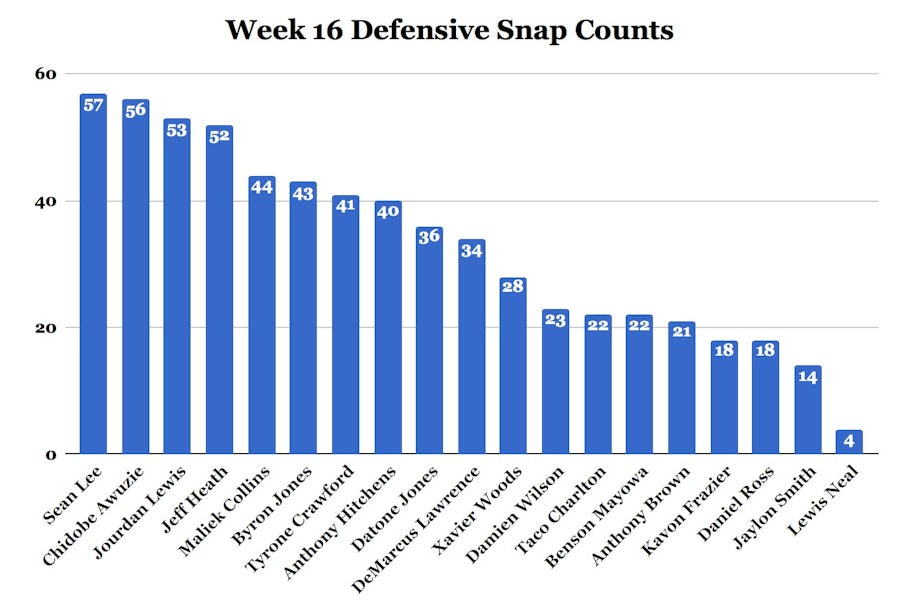
They will need Sean Lee to find the fountain of youth, or they will need to get more realistic about what he can provide. He barely got to 600 snaps this year after hitting nearly 1,000 last year. They depend on him for everything and, while there is no question he gives it all he has, he will be 32 when next season begins, so the fault will be on the Cowboys if they continue to place all their eggs in his aging basket.
They have loads of work to do. There is no question the offseason will again be pivotal. They certainly have pieces in place, but they also have holes to fill.
The 2017 season will not be remembered well. Nor should it be. Once again, the Garrett Cowboys disappointed when they were asked to follow up on success.
Back to the paragraph I begin and end every season with -- updated for the 20 seasons I have completed in covering the Dallas Cowboys:
Twenty seasons, just eight (40 percent) resulted in playoff football on any level. You realize just five (25 percent) have been NFC East divisional titles. From there, in 10 playoff games over 20 years, two (10 percent) of those special years -- 2009 vs. Philadelphia and 2014 vs. Detroit -- did the team do so much as win a wild-card playoff game. And at no point in those 20 seasons have they even secured a spot in the final four (zero percent), let alone a Super Bowl (zero percent).
Now, yet again, they return to the drawing board. Plans are being drawn up for Season 21.

Wednesday, December 27, 2017

Marinelli Report - Week 16 - Seattle

https://sportsday.dallasnews.com/dallas-cowboys/cowboys/2017/12/27/marinelli-report-defense-allowed-little-loss-seattle

The Marinelli Report

If you are wondering, the answer is Nov. 11, 1966.
Fifty-one years ago and some change is how long it had been since the Dallas Cowboys managed to lose a game to an opponent that produced as little offense as the Seahawks did Sunday, when they took a vital game with high stakes after generating just 136 yards of total offense.
I was wrong in assuming it had never happened before in Cowboys history. Just not in my lifetime. But evidently, it happened twice in the 1960s. And the most recent time -- that day 51 years ago -- was a day in which the Eagles beat the Cowboys 24-23 and generated all of their points off three special teams plays. Two Timmy Brown kickoff returns and Aaron Martin's punt return accounted for all three of the Eagles' touchdowns and overcame the fact that the Eagles had 80 total yards of offense as they took down Don Meredith and the Cowboys.
The other occasion was even longer ago, in 1965, as Craig Morton took the loss in Milwaukee against those Green Bay Packers, who generated all of 63 total yards to beat the Cowboys 13-3 in one of the more forgettable meetings between the two rivals.
But if you are asking if it had ever happened in a Dallas Cowboys home game, the answer is no. Before Sunday, the Cowboys had never lost a game in which their defense had allowed so few as 136 yards. For that previous record, you had to go all the way back to 1961, when the St. Louis Cardinals took the win in the Cotton Bowl against your Cowboys with 193 yards of offense, two Bill Stacy interception returns for touchdowns and the aid of five Cowboys turnovers from Eddie LeBaron and friends.
That is how rare Sunday's result was.
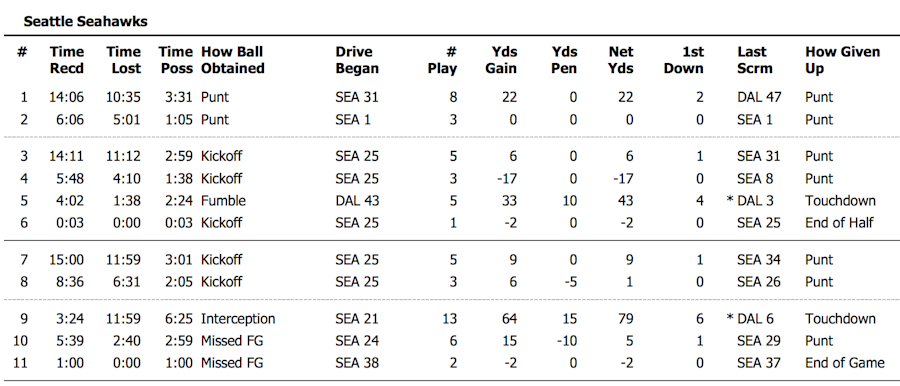
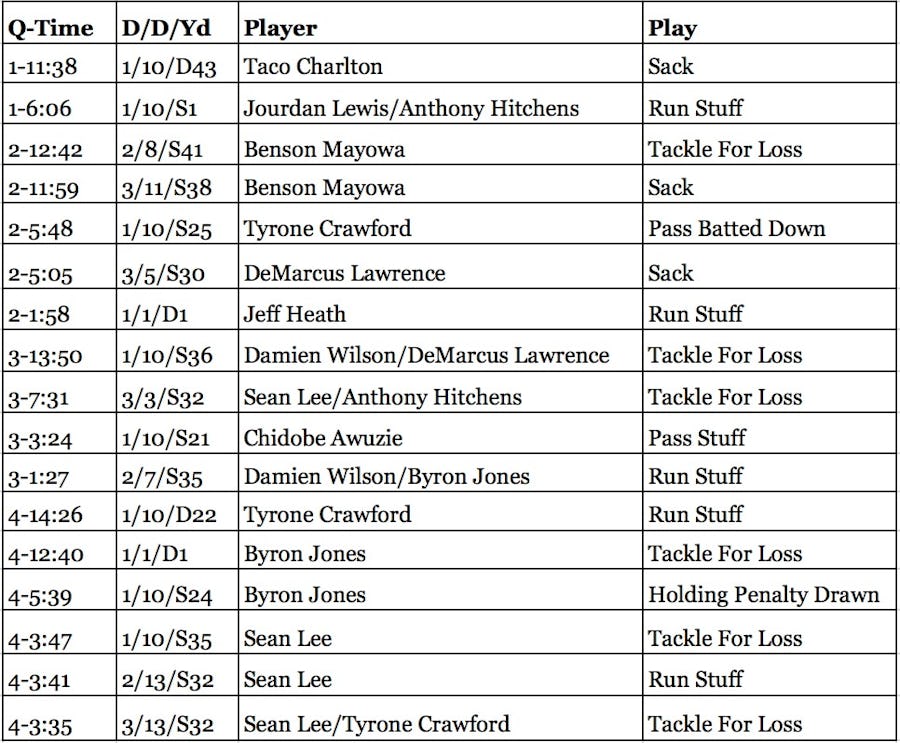
The Cowboys defense allowed very little. Here is a look at what should be a victorious defensive drive chart:
As you can see, the Seahawks did put together two successful drives -- both started by Cowboys turnovers -- that were taken into the end zone. Add to that a third touchdown on the Dak Prescott pick-six, and you see how the Seahawks won something rather uncommon: a game in which their offense did not move the ball all day long. But in games where they are minus-3 in the turnover battle, the Cowboys lose almost every time (as would everyone else). The Cowboys are now 11-113 in games all-time when they take a minus-3 in the turnover battle. Can't do that and survive.
... Which leads us to the actual issues of Sunday for the defense. If you are going to choose between giving up yardage or taking the ball away, we certainly know the correlation stats. Takeaways are how a team wins football games. Yardage is generally just yardage. And while we properly place most of the blame on the offense for the way the season has deteriorated, we should take careful note of this defense not generating any takeaways for the fifth time this season. That doesn't lead the league -- Miami has actually had seven games with no takeaways -- but it has led to losses. As a league, regardless of any other factor (quality of the opponent, site of the game, etc.), teams win just 26 percent of the games in which they generate zero takeaways. The Cowboys, now 1-4 in those games (they beat Arizona), are at 20 percent.

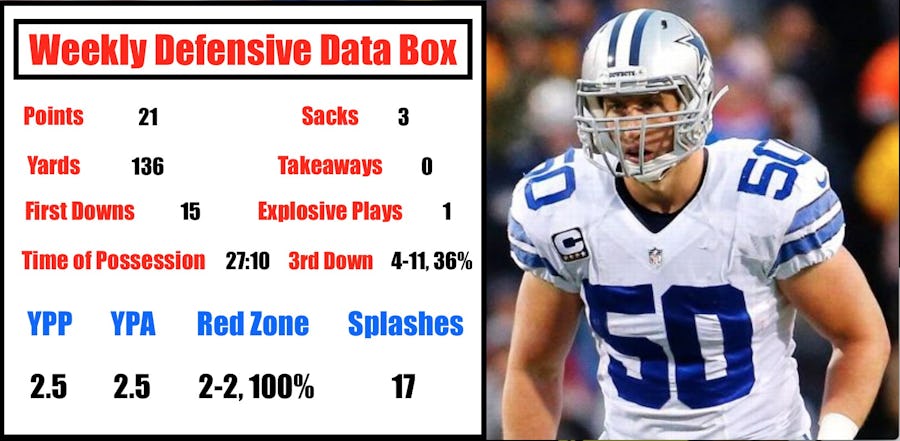
WEEKLY DATA BOX

It certainly takes the analysis out of an analysis piece to surmise that you reached just about every objective you would like in a game like this, but people, let's be reasonable here. No team is supposed to lose a game in which the defense allowed 2.5 yards per play. That is just insane. The Seahawks are a very poor offensive team -- no doubt about it -- but this is the NFL, and they have Russell Wilson. You limited them to one drive of substance, one play of 20 yards and sacked Wilson three times. And you still lost.
Defensive reasons for losing? Well, the red-zone defense allowed two touchdowns in two opportunities and you never got a takeaway. Otherwise, there isn't too much to complain about.

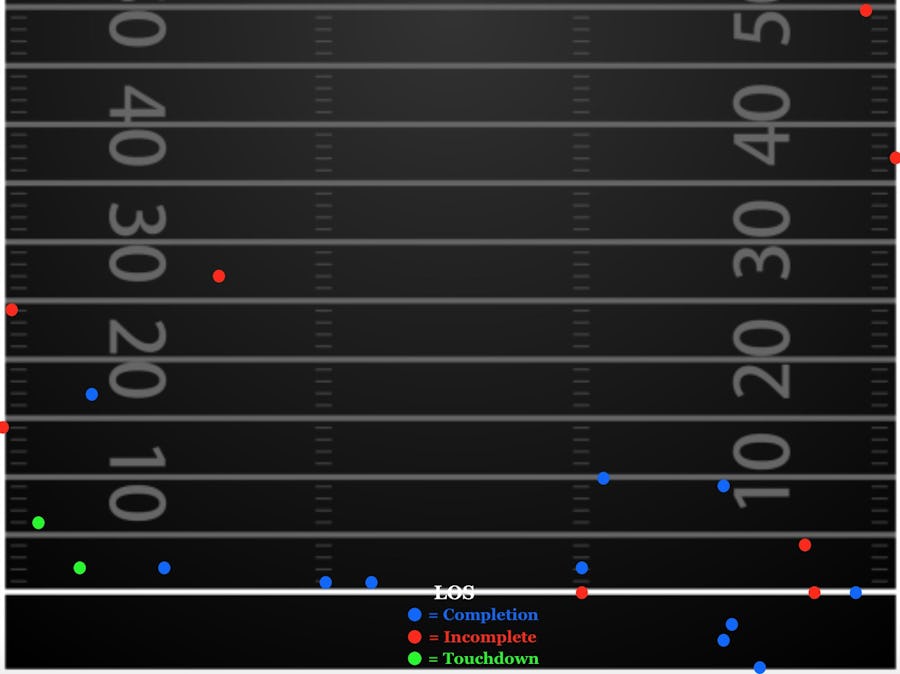
RUSSELL WILSON THROW CHART

You would be hard-pressed to play Wilson much better than this. He is a dangerous playmaker who has speedy weapons that can cause issues, for sure. And the Cowboys limited him almost totally. Almost. He will take shots down the field, but there was almost nothing in this game.

EXPLOSIVES ALLOWED

SPLASH PLAYS - VS. SEATTLE

SPLASH PLAYS - SEASON TOTALS

Again, it was the Cowboys defense in a bit of a nutshell. It played well. It played fine. But it didn't generate a play to win the game and, by anyone's measure, was the second-best defense on the field Sunday. It plays hard, it gets things accomplished, it could be worse ... But in the end, it is a defensive unit that is middle-of-the-road. That worked well when the offense was top five. But middle-of-the-road offense and middle-of-the-road defense means a season around 8-8.
And here we are.
Let's check a few videos:
I think Taco Charlton can feel good about the finish to his rookie season. More and more as the year has gone along, he has started to show up a bit more and there are signs that he has a future. I know opinions are all in ink and I definitely had views on draft weekend about the Cowboys taking him, but since he has been here, I have no real issues with his attitude or tools to develop. I think in Year 3, he has a chance to be pretty nice. This shows his size and his power. He closes Wilson down on a four-man pressure that brings a linebacker and drops Maliek Collins into a spy role. Charlton now has three sacks, and we can be optimistic that he can make a run at 6-8 next season.
Here is the "Deacon" package on third down -- three rushers and one linebacker spy who delays his rush. On this, Benson Mayowa gets left tackle Duane Brown nicely. That requires some real strength to grasp on and bring him down in that frenzy, and he made it look easy. Mayowa has just this one sack after six last season, but I still really like his flashes that have drawn multiple holding penalties and caused other plays despite not getting the sacks.
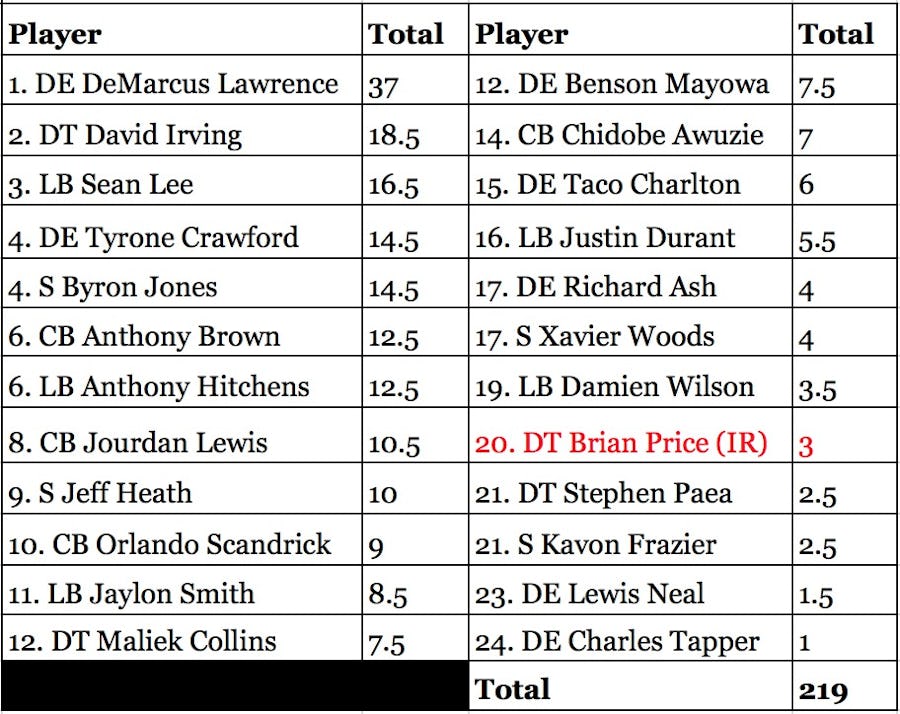
Here is the fantastic sack by DeMarcus Lawrence on Sunday that demonstrates he was not an early-season fluke. He now has 14.5 sacks on the season (admittedly, September and October were his best work), which likely says he has received much more attention as the season has gone along and that it would have been nice to have had David Irving play more this season. Regardless, he is just a half-sack behind the league lead and I bet a sack title would cap off his fine pre-free agency season.
I don't know what your first reaction was when Lawrence ran down Wilson, but this was mine:
Now, that is an obvious reference to some and a confusing tweet to others. So, let's let everyone in on the fun. Here is the Bob Griese sack by Bob Lilly in Super Bowl VI (the very rare Bob-on-Bob sack):
They still haven't posted the All-22 from Super Bowl VI, but it does show you that even with all of this time passing, quarterbacks running backward to try to keep a play alive often goes very poorly.
Now, those two red-zone touchdowns were a big story, so let's view them.
This is Jimmy Graham. He is 6-foot-7, 265 pounds. Jourdan Lewis will try to cover him. He is 5-10, 188. How did you think this was going to go? On the goal line, they are trying pre-snap motion to see if they can get this matchup or if Byron Jones will follow him (which causes its own issues and may not fare considerably better). This is their Dez Bryant fade, but it is even more of a sure thing. If you have a big target on a tiny defender, this is a pretty easy decision for your quarterback to make.
Look at the Cowboys trying to sort through this after the motion. Wilson is thinking, "Are they serious? They are leaving their 5-10 corner out there against him?"
Second and goal from the 6-yard line. This is where you really needed to force a field goal if possible. You can see the Cowboys are going to double Graham here and the Seahawks are going to isolate a rub route to where they find individual coverage. Red-zone defense is really difficult if they have a Graham, because either you double him or you don't. And either decision is going to be wrong because the Seahawks have seen it all. This time, they use Doug Baldwin to the corner and Chidobe Awuzie gets caught sitting on the slant (it appears). Touchdown.
Next week, we finish up 2017. For now, let's put this Seattle game to bed and turn the page.

Tuesday, December 26, 2017

Decoding Linehan - Week 16 - Seattle

https://sportsday.dallasnews.com/dallas-cowboys/cowboys/2017/12/26/decoding-linehan-offensive-frustration-continues-even-elliott

Decoding Linehan

There are many issues this offense is dealing with right now. I agree, the quarterback position and play of Dez Bryant are both significant issues that are causing about 95 percent of the discussions taking place among the fan base.
Unfortunately, there are several others we should also consider.
  1. Left tackle Tyron Smith is about to finish the season with a career low in snaps by a significant margin. After five years of nearly-perfect attendance from 2011-15, we are seeing some signs of a body that is awfully beat-up and, while that may just be a bump in the road, it is worth stressing after seeing how difficult offensive football has been for this team when he is unavailable. Once again on Sunday, when this team needed strong play from its left tackle, there was none to be found. And once again, when the Cowboys did not help out their third different left tackle used in the second half of this season, that player became a target.
  2. Ezekiel Elliott had a significant problem with blitz pickups Sunday. When we talk about sharpness from a long layoff and then see several mental busts, there is some level of frustration in that it appeared he had never dealt with a DB blitz before -- and Seattle attacked him relentlessly on third downs.
  3. The run game continued to produce well enough -- lots of positive yardage and staying ahead of the chains -- but just like with Alfred Morris and Rod Smith, we saw no big runs with the return of Elliott. This is a massive departure from 2016, and it could lead to a number of explanations. But regardless of the reasons, Elliott has really seen his home runs drop through the floor, even if the overall production is still strong. In 2016, he had 42 runs of 11-plus yards on 332 carries (one every 7.9 carries). In 2017, Elliott has just 14 runs of 11-plus yards on 215 attempts (one every 15.4 carries). In explosive runs (runs of 20-plus yards), he had 14 in 2016 (one every 23.7 carries) and four this year (one every 53.8 carries).
Add in Cole Beasley barely getting to 300 yards, another year of Bryant looking like he is in decline, Jason Witten's production falling off, Terrance Williams' inconsistent production and the fact that the Cowboys have given up 21 sacks since Week 9 (fourth-worst in the NFL), and you see what we have here: A team that has spent the majority of its resources on offense, and then had the offense underperform for the stretch run of the season.
Only twice since the Kansas City game (seven games) have the Cowboys eclipsed 300 yards of offense. One of those was the Oakland game, with 330 and hardly a devastating showcase, and the other was the Giants game three weeks ago, when the Cowboys were pretty weak for three quarters.
In other words, the entire second half of the season has been an offensive failure -- and the principal reason they will miss the playoffs. Furthermore, I am not sure you can find a single part of the offense you would say is blameless.

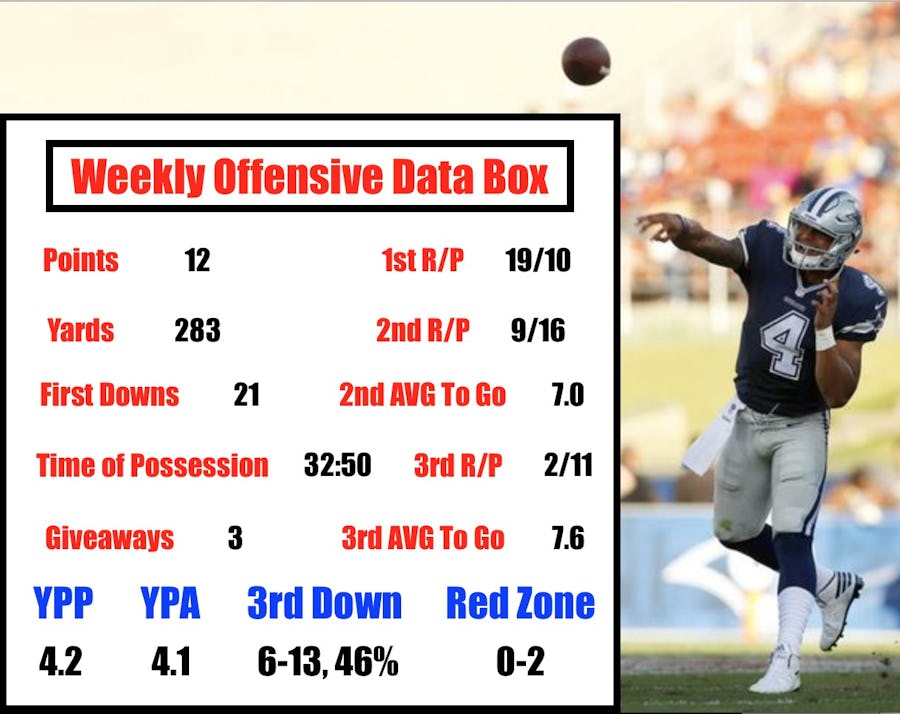
WEEKLY DATA BOX

They just have no productivity, which makes moving the ball impossible. No big plays to speak of, and that requires precision in execution on third downs and in the red zone. There is nothing wrong with converting 46 percent of third downs in a vacuum, but when you go 0 for 2 in the red zone, have three giveaways and produce less than 300 yards, you get what you had Sunday (or for the past seven weeks): disappointment.

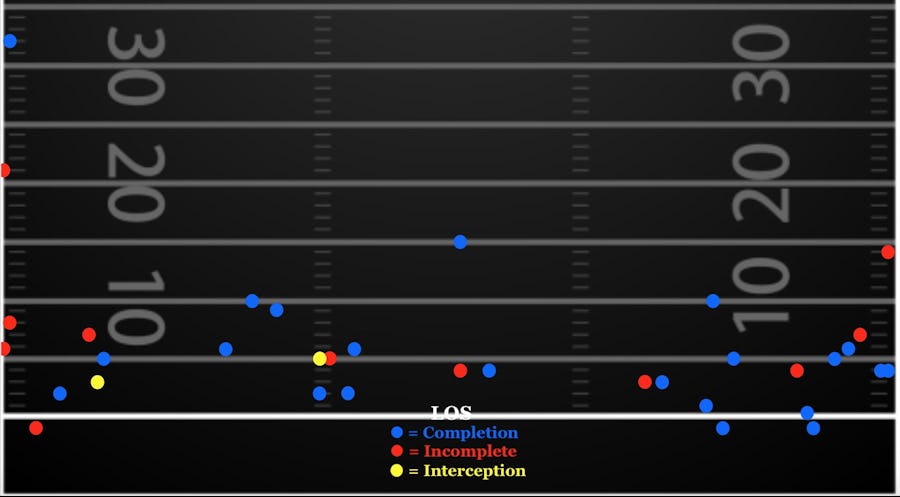
DAK PRESCOTT THROW CHART

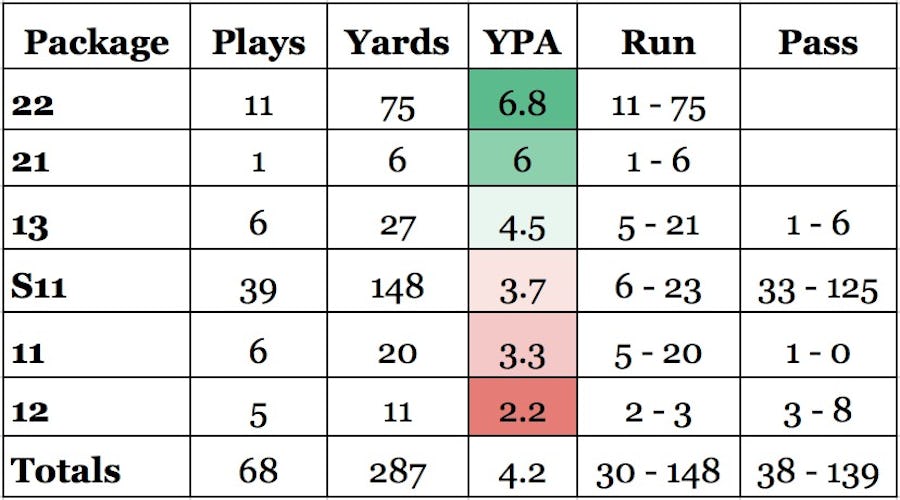
No, this is not the same chart we run each week. This is the Cowboys' pass game in 2017. Again, you can put all of this offense on a fourth-round pick who is in his second year, or you can ask the coaching staff to consider not playing into the teeth of the opponent with the same route combinations at the same depths week after week. They clearly don't trust their quarterback much and are moving more and more to "13" and "22" personnel packages. This relies on big runs and, like we discussed above, they are not getting those.

PERSONNEL GROUPINGS

If you are new here, the packages include the letter "S" to indicate shotgun. I don't always explain this, but this week it is important. All of the packages without the "S" mean Dak Prescott is under center. This week, you see that they ran 29 plays from under center and 24 were runs. That is an 83-percent run rate from under center and the opponent is well aware of this. So to all of the "Feed Zeke" folks: If Seattle knows that 83 percent of your plays from under center are going to Elliott, you realize you are running into loaded boxes and, while you may get 4-5 yards, it is going to be more and more difficult to break one. You need deception, as we discussed last week. I would prefer that you are much closer to 66 percent so that those linebackers and safeties are not locked in on the run so much. But you can assume the coaches are scared of their quarterback, who has now thrown four pick-sixes this year. That is an amazingly disappointing number -- one of many.
Let's look at some tape:
Small disclaimer here: Assigning blitz responsibility is difficult from this laptop. If we don't know the call, we must simply deduce some things from the action on the field. But, know this: Seattle was blitzing on almost all third downs and was certainly not treating Elliott like the pass-protection master many have claimed he is. The Seahawks were testing his preparedness and acumen with many different looks.
That said, this is the first third down of the game and it is pretty clear that he is watching No. 54, Bobby Wagner, for a blitz (Wagner is also watching him for a release). And Seattle figured as much, which is why it blitzed someone from the opposite side altogether. Is this Elliott's man, or is the free man one Prescott must deal with? I believe the running back was supposed to be aware, but that is my guess. Regardless, the quarterback is certainly not acting like he is expecting pressure and the play is dead. Since it was third down, the drive is dead, too.
Next drive, same concept. Elliott has a man covering him who has no intention of blitzing. But the Seahawks are bringing pressure again from the other side. It starts with the defensive tackle going to the center and the defensive end going wide, which leaves a hole you can drive a truck through to blitz a slot defensive back through the B-gap on the side opposite of Elliott. We did not see teams challenge the Cowboys like this in 2016. But they realize time is precious on third down and are banking on the Cowboys reading it incorrectly. Again, it is difficult to say what exactly the assignments are, but the options are pretty much Elliott, or that it is Prescott's free rusher and he has to get the ball out immediately. As you can see, none of the receivers appear to be reading blitz. So, he throws a hopeful back-shoulder fade downfield.  
Here is another. This one -- early in the second quarter -- looks like one when your running back must get the extra rusher, and Elliott looks like he chose incorrectly. There are six rushers, so everyone has to take a guy. Five offensive linemen and Elliott, and you cannot necessarily match big on big. In spots like this, you will need precision decision-making, and Elliott or Jonathan Cooper here got confused and the play is again dead. Prescott cannot worry about those guys doing their jobs. They have to sort it out and he has to keep his eyes downfield and depend on them. Branden Jackson (No. 93) going untouched means Prescott has no chance.
Key spot in the third quarter. This one is easy. The Seahawks are feeding off each successful third-down situation and are now enjoying throwing confusing looks at Elliott. His demeanor now shows his frustration. This is a very big deal and was glossed over when his coach suggested, "I thought he did really well. He practiced well all week long and I thought he did very well in this ballgame."
I don't think he played really well on these third downs and the Seahawks were feeding off of it. He normally handles this well, but being a three-down running back means you help the passing game protect on third down. Sunday, that aspect was pretty poor from him.
Then, with Tyron Smith out, the Cowboys still thought "Empty" was a good plan. Of course, what that means is your backup left tackle (or your backup's backup) was on an island against Seattle edge rushers. First, Dion Jordan got Byron Bell on Prescott's blindside.
And this isn't "Empty," rather, a quick release from Elliott that means Bell is again on an island against Frank Clark. Goodness gracious, that is Chaz Green again. You can't leave most left tackles on their own against good rushers for long. This is why.
Now, the two killer interceptions:
This one is disconcerting for two reasons. One, he has Witten open down the middle of the field. Two, he sails a short throw to Elliott so badly that a defensive back who isn't even covering him is able to grab the ball and strolls in to the end zone. Just very poor quarterback play here. And this is absolutely the type of play that, on its own merit, loses the game in one snap. It can be overcome, but Seattle was not moving the ball. Provided that you don't give them a touchdown, you very likely win.
And then this one reminds you of the pass in Oakland that was intercepted. The issue was that Bryant was going to be run right into NaVorro Bowman, and that is partially on the quarterback to try not to get his wide receivers hurt. So here, you can see Prescott thinking, "I want a safe throw to Dez to keep K.J. Wright away." So, he purposely throws it to the other side but puts way too much speed on the pass. My dad would blame Bryant on this, but at most, it is a 50/50 shared blame. The throw could have been way better and he clearly has the yips on touch passes right now.
They are at the Seattle 25 right here and will very likely take the lead with a field goal as long as they don't give the ball away. Which they did. Very poor offense.
Finally, what everyone wanted examined: What were the Cowboys doing in the fourth quarter not giving the ball to Elliott on first and goal from the 3-yard line?
So, this is literally the same RPO they have run over and over all year in the red zone. Mesh point to Elliott but, if you don't like the numbers, look to Beasley on the slant. And if you don't like that, keep it and run yourself. I think on first down from the 3, you give it to Elliott regardless of the numbers, but this is clearly not what is taught. This is, however, an argument for taking control back from the quarterback. Hey, even Tony Romo had issues with this. We can find situations when he should have been stubborn with DeMarco Murray but instead elected to throw. But here we are. As you can see, Beasley looks like he is open on the backside -- but, I submit that Earl Thomas is baiting the throw and is planning on playing the slant because he has seen it on film all season. He never sells to run support until Prescott stops looking at Beasley. I believe that Thomas is sitting on Beasley (not his man, but the free safety) and Prescott sees Thomas. Wisely, Prescott doesn't throw it, but then the play is in trouble. That's OK. Live to play another down.
End-zone view of that same play. Watch Thomas, No. 29. This is fantastic safety play and give Prescott credit for not throwing a dangerous pass. Once Thomas sees Prescott pull the ball down, he closes quickly, but this premise that Beasley is wide open is only partly true. When he is headed to the post, I think Thomas is ready to pounce and, at best (for the Cowboys), deflect it. At worst, that is a pick.
So now it is second and goal and this is the one I really have an issue with. This is a designed rollout pass that has no chance and ultimately ends with a Witten holding penalty, as the double-team on Michael Bennett goes very poorly. But there is no run-fake and no chance for Elliott to affect the play. I don't like this call at all and wish they would have pounded it here.
I guess we wish a lot of things about the offense this year. It just never clicked for very long.